Destination Overview
Hell's Gate National Park lies south of Lake Naivasha in Kenya, north west of Nairobi. Hell's Gate National Park is named after a narrow break in the cliffs, once a tributary of a prehistoric lake that fed early humans in the Rift Valley. It was established in 1984. A small national park, it is known for its wide variety of wildlife and for its scenery. This includes the Fischer's Tower and Central Tower columns and Hell's Gate Gorge. The national park is also home to three geothermal power stations at Olkaria. The park is equipped with three basic campsites and includes a Maasai Cultural Center, providing education about the Maasai tribe's culture and traditions.
History
Hell's Gate National Park is named after a narrow break in the cliffs, once a tributary of a prehistoric lake that fed early humans in the Rift Valley. It received the name "Hell's Gate" by explorers Fisher and Thomson in 1883. In the early 1900s, Mount Longonot erupted, and ash can still be felt around Hell's Gate. The comprehensive Olkaria Geothermal Station, the first of its kind in Africa, was established in 1981 and generates geothermal power underneath Hell's Gate from the area's hot springs and geysers. The park was officially established in 1984. Two more geothermal stations were added after 2000: Olkaria II and Olkaria III.
Geography
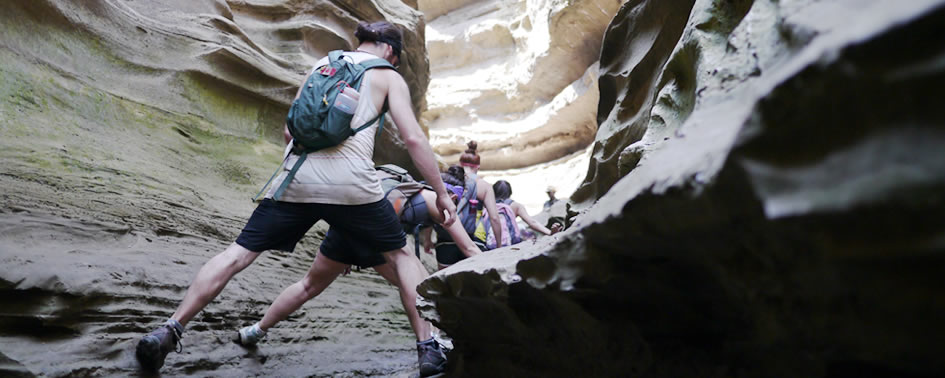
Hell's Gate National Park covers an area of 68.25 square kilometres (26 sq mi), relatively small by African standards. The park is at 1,900 metres (6,200 ft) above sea level. It is within Nakuru County, near Lake Naivasha and approximately 90 kilometres (56 mi) from Nairobi. The park is located 14 kilometres (9 mi) after the turnoff from the old Nairobi-Naivasha highway, and has a warm and dry climate. Olkaria and Hobley's, two extinct volcanoes located in the park, can be seen as well as obsidian forms from the cool molten lava. Within Hell's Gate is the Hells Gate Gorge, lined with red cliffs which contain two volcanic plugs: Fischer's Tower and Central Tower. Off of Central Tower is a smaller gorge which extends to the south, with a path that descends into hot springs that have rocks hot enough to cause burns, and sulfuric water.
What to see and do
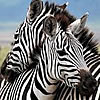
There is a wide variety of wildlife in the national park, though many are few in number. Examples of little seen wildlife include lions, leopards, and cheetahs. However, the park has historically been an important home for the rare lammergeyer vultures. There are over 103 species of birds in the park, including vultures, Verreaux's eagles, augur buzzard, and swifts. Hyraxes, African buffalo, zebra, eland, hartebeest, Thomson's gazelle, hyena, and baboons are also common. The park is also home to serval and small numbers of klipspringer antelope and Chanler's mountain reedbuck.